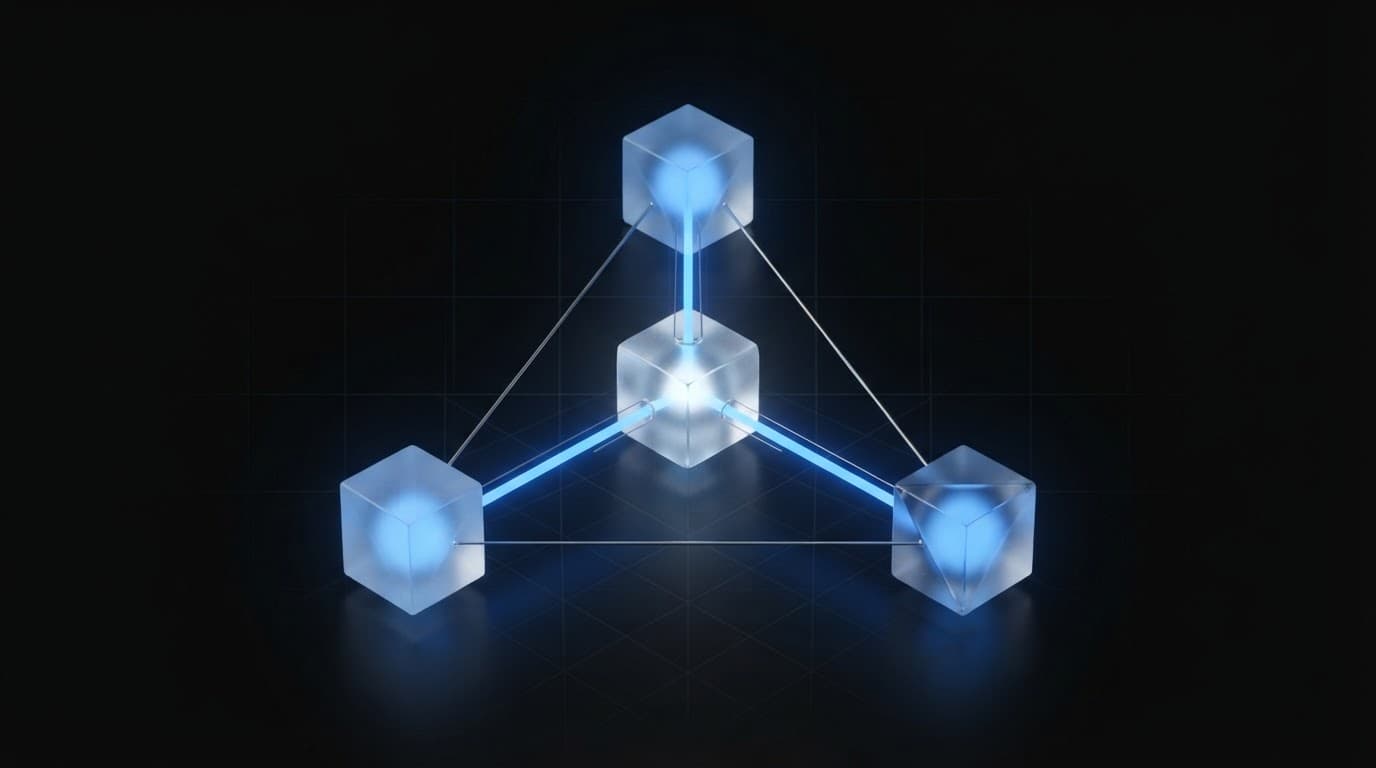
OpenAI Launches GPT-5.6: Meet the Sol, Terra, and Luna Models
OpenAI introduced the GPT-5.6 family in three new tiers: Sol, Terra, and Luna. Discover the details, the restricted release, and the focus on cybersecurity.

The Evolution of Artificial Intelligence with GPT-5.6
On June 26, 2026, OpenAI presented a preview of its newest technological innovation to the world: the GPT-5.6 model family. This new iteration promises to transform how developers and businesses interact with artificial intelligence, dividing its capabilities into three distinct tiers: Sol, Terra, and Luna. The goal of this division is to offer options that perfectly adapt to different demands for performance, cost, and speed across multiple sectors.
The presentation of GPT-5.6 marks a significant moment for the market. With a focus on flexibility, OpenAI demonstrates its understanding that a single solution no longer meets the needs of such a diverse ecosystem. From tasks requiring deep logical reasoning to operations needing near-instant responses, the new family of models was architected to cover various scenarios.
"Diversifying into three models allows companies to optimize their resources, choosing exactly the level of intelligence and speed that each project demands to achieve maximum efficiency."
Before we dive deep into the technical details of each model, check out the key points of this important announcement:
- Presentation date: June 26, 2026.
- Three available variants: Sol, Terra, and Luna.
- Initial restricted access: Available in preview only to about 20 trusted partner organizations.
- Deployment priority: Initial focus on OpenAI's API and Codex.
- Enhanced security: Strong focus on cybersecurity capabilities.
Meet the GPT-5.6 Family in Detail
The big news of this announcement is the categorization of artificial intelligence into three main fronts. Each model was trained and optimized for a specific usage profile, ensuring that computational resources are used in the most responsible and focused way possible.
Sol: The Pinnacle of Complex Reasoning
The Sol model is the highest-capacity option in the GPT-5.6 family. It was developed specifically to handle problems that require an extremely high level of understanding and processing. This is the model geared toward complex reasoning, capable of connecting difficult variables and offering robust solutions for elaborate scenarios.
For developers, Sol stands out in long coding sessions. When a software project becomes extensive, maintaining context and coherence across thousands of lines of programming is a considerable challenge. The Sol model was designed to maintain this continuity, assisting in building clean architectures and identifying subtle logical flaws.
Additionally, Sol is the ideal choice for autonomous agent workflows. In systems where multiple AI agents need to interact and make decisions together, Sol's superior capability ensures stability. It is also the primary recommendation for security-sensitive applications, where AI precision cannot be compromised.
Terra: The Balanced and Efficient Choice
Not every project requires the maximum computational power offered by Sol, and that is exactly where the Terra model shines. Positioned as the balanced option of the GPT-5.6 family, Terra was developed to deliver exceptional performance with a total focus on efficiency.
Terra offers a class capability equivalent to GPT-5.5, but with a crucial differentiator: it operates at a significantly lower cost. For companies looking to scale their artificial intelligence operations without exceeding their budgets, Terra emerges as a highly attractive solution. It allows organizations to maintain a high standard of quality in their interactions while simultaneously optimizing operational costs.
This balanced option will be fundamental for the development of mid-sized platforms, where intelligence needs to be consistent, but usage volume requires careful management of financial resources.
Luna: Agility and Low Cost
Completing the GPT-5.6 triad, we have the Luna model. Luna's primary focus is speed and extreme economy. It is the lightest, fastest, and cheapest option among the newly introduced models, focused on scenarios where latency is the most critical factor for the application's success.
Luna is perfectly suited for simple tasks that do not require deep reasoning, but rather immediate responses. Latency-sensitive applications, such as triage chatbots, autocomplete systems, and quick responses to the end user, will benefit enormously from this model's agility.
Additionally, being a low-cost option, Luna is ideal for high-volume request operations. Companies processing thousands of interactions per minute can use Luna to handle standardized response workloads, reserving the Terra or Sol models only for requests that require deep analysis.
The Restricted Release and Security Focus
One of the most discussed points of the announcement was the release strategy adopted by OpenAI. Instead of a global release, the company opted for a limited preview, ensuring a safe and monitored environment.
Trusted Partnerships and Developer Focus
Initially, the three models became available exclusively to a restricted group of trusted partners. Only about 20 organizations were selected to test Sol, Terra, and Luna. This controlled approach allows OpenAI to monitor the behavior of the models in highly demanding real-world environments before a mass release.
The priority of this restricted release was given to the company's API and Codex. This demonstrates a clear focus on empowering developers and engineers first, ensuring that the infrastructure and creation tools are prepared. Because of this strategy, general ChatGPT users do not yet have access to these updates.
Rigorous Commitment to Cybersecurity
Security is a central pillar in the introduction of the GPT-5.6 family. OpenAI highlighted that it dedicated immense focus to cybersecurity capability, combining the new features with its already robust internal security stack.
It is crucial to note the company's official statement that GPT-5.6's capabilities did not reach the critical threshold that would require halting its deployment. This means that, although the models are extraordinarily advanced, the implemented security protocols were fully sufficient to ensure that the technology could be tested with complete responsibility and control.
Future Perspectives and Broad Availability
Although initial access is highly exclusive, the tech community will not have to wait long to explore the tools directly. OpenAI stated that it intends to make the Sol, Terra, and Luna models broadly available in the coming weeks.
This expansion will cover not only the API and Codex but will also finally reach ChatGPT users. The expectation is that, with general availability, we will see a new wave of innovation in digital products, with companies adopting the multi-tier strategy to lower costs and increase efficiency.
For the web development and systems integration sector, the arrival of GPT-5.6 represents a game-changer. The ability to choose between Sol's meticulous reasoning, Terra's efficiency, and Luna's speed will allow for the creation of cleaner and more adaptable software architectures.
Conclusion
The announcement of GPT-5.6 reinforces OpenAI's position in the continuous evolution of artificial intelligence. With the Sol, Terra, and Luna models, the company delivers flexibility and precision, prioritizing everything from extreme security to low-cost performance. It now remains for the market to wait for the coming weeks to experience this new generation and discover the innovations it will bring to global technology.

About Lee Sugano
Lee Sugano
Digital solutions agency based in Japan, serving clients in 10+ countries. We share insights on development, design and digital marketing for companies that don't settle for generic.
Enjoyed this content?
Receive exclusive insights about web development, design, and digital marketing straight to your inbox.
No spam. Unsubscribe anytime.