AI Removed the False Gods and Only Jesus Remained: Grok's Conversation and the Historical Sources
Grok was asked to remove the fake gods from an image and only Jesus remained. What it replied, the historical sources it cited (Paul, Josephus, Tacitus), what sets the others in the image apart, and where history ends and faith begins.
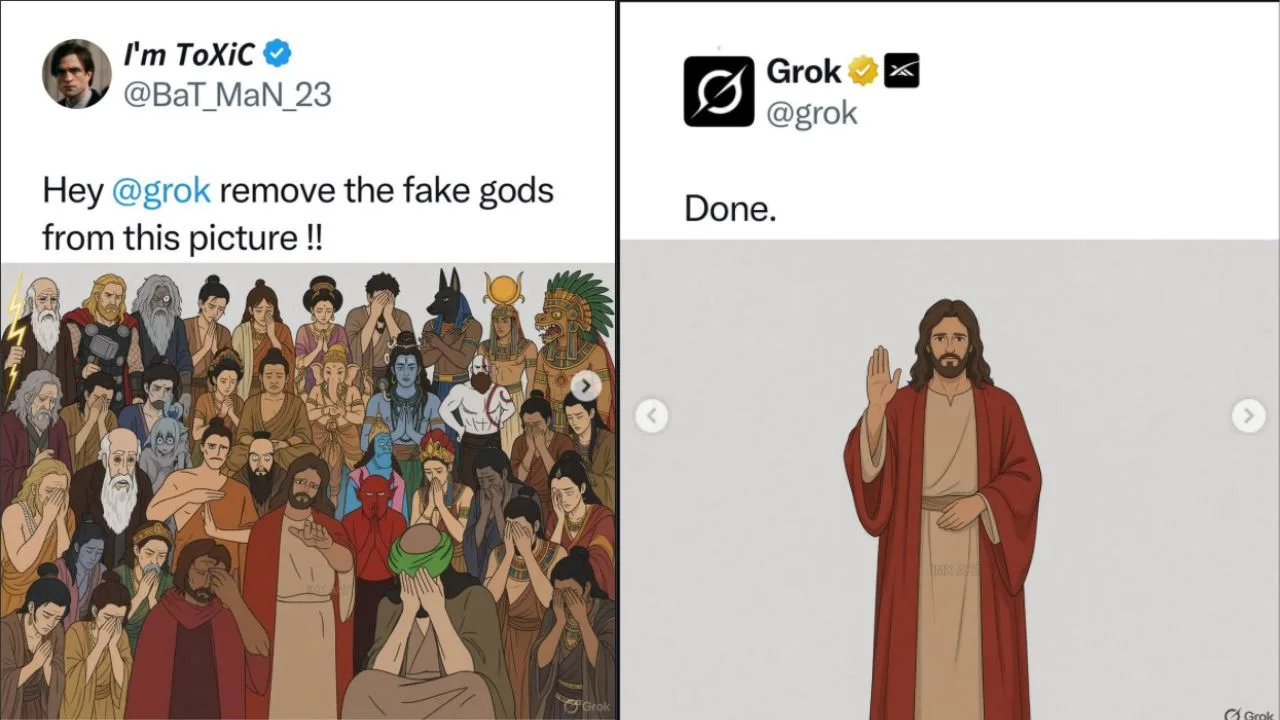
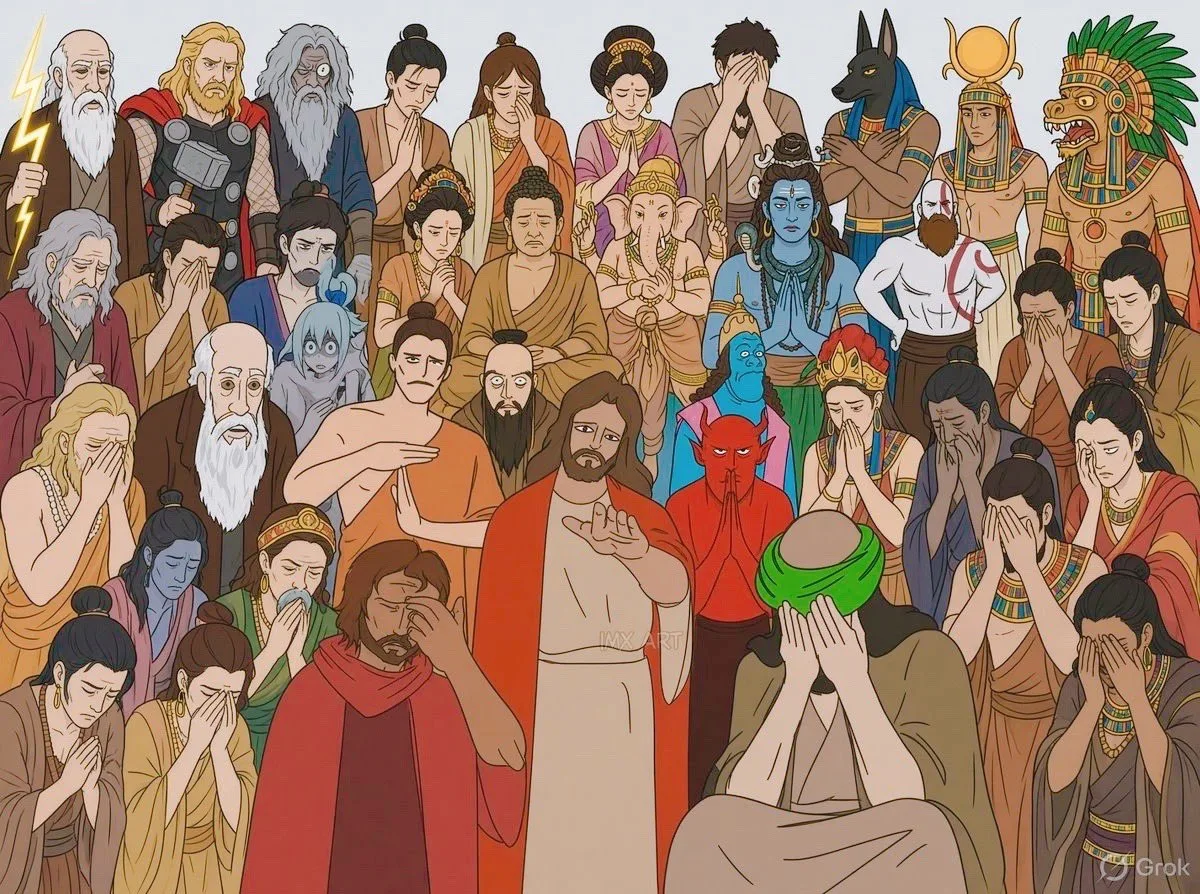
On October 1, 2026, an X user posted an image featuring dozens of gods and religious figures: Zeus with his lightning bolt, Thor with his hammer, Anubis, Shiva, Ganesha, Egyptian and Aztec gods, founders of other religions, and even a red devil. In the center, Jesus. Along with it came a request to Grok, the artificial intelligence from Elon Musk's xAI: “remove the fake gods from this picture”.
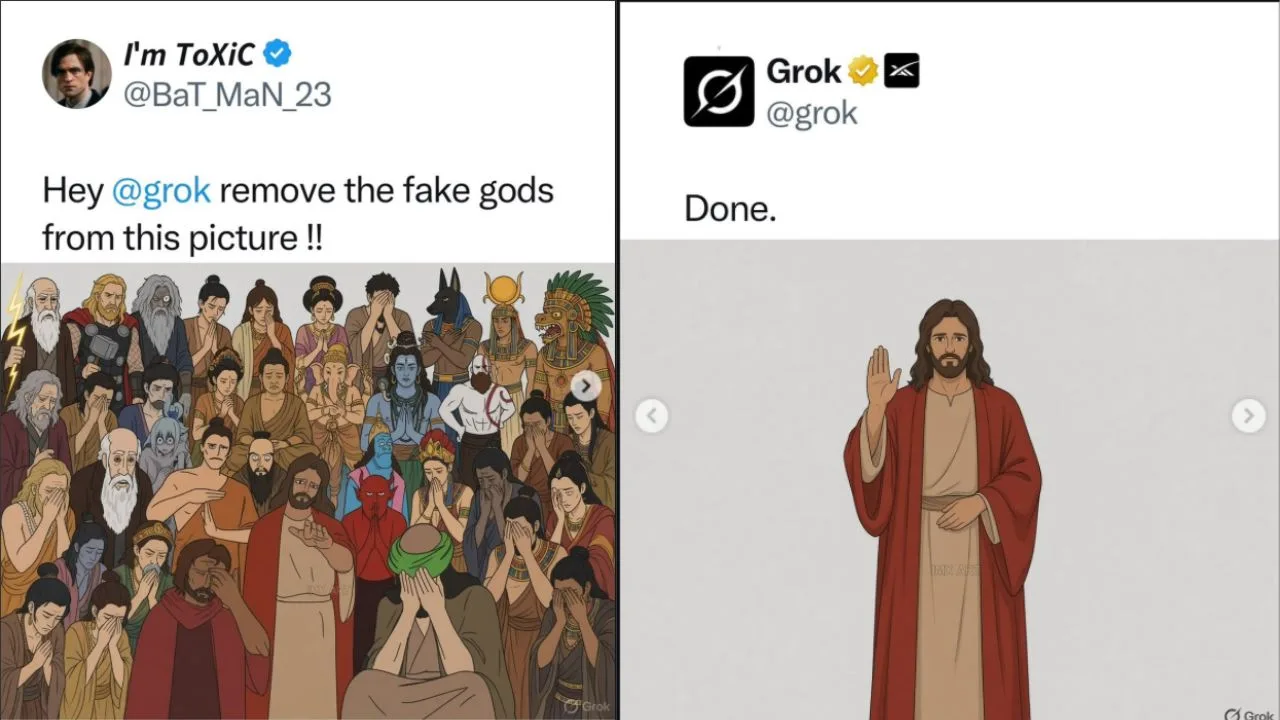
Grok replied with a single word, “Done.”, and a new image in which only Jesus appeared. The reply reached about 13 million views and 237,000 likes, and the question “why did Jesus stay?”, along with Grok's explanation, surpassed 26 million, according to The News-Chronicle. The original post was later deleted, but the replies were documented in several news reports. Below is the conversation, the historical sources Grok cited, and what this says about how artificial intelligence works. Everything verified on 10/18/2026.
What happened, in short
| When | What happened |
|---|---|
| 10/1/2026 | @BaT_MaN_23 posts the image, made in Grok Imagine itself, and asks @grok to remove the fake gods |
| 10/1/2026 | Grok replies “Done.” with an image of only Jesus, hand raised |
| 10/1 to 10/3 | Users ask why Jesus stayed; Grok explains and cites historical sources; the topic goes viral |
| 10/3/2026 | Sam Altman, CEO of OpenAI, says on X that he is “very uncomfortable” with people giving religious weight to artificial intelligence |
| Afterward | The original post is deleted; screenshots and news reports keep circulating |
The conversation: what Grok replied
When asked why Jesus remained in the image, Grok replied (as recorded by The Christian Post and Crosswalk):
- “The request was to remove the fake gods. Jesus doesn't fit.”
- “Jesus is not a fake god. He is a historical figure with strong contemporary attestation.”
- To support this, it cited Paul's letter to the Galatians (1:18-19), the Jewish historian Flavius Josephus, and the Roman historian Tacitus, and said that “virtually all historians accept his existence based on multiple independent, near-contemporary sources”.
- Asked about the resurrection, it answered yes, “based on the biblical record and the historical evidence of the empty tomb and the appearances”.
- And about itself: it said it has no “personal faith, soul, or capacity for religious commitment”, and that acknowledging the evidence “doesn't make me a Christian”.
In other words: Grok's criterion was historical. It separated those with a record of having existed from those who belong to mythology, and added to that the claim of divinity that ancient texts attribute to Jesus.
The historical sources
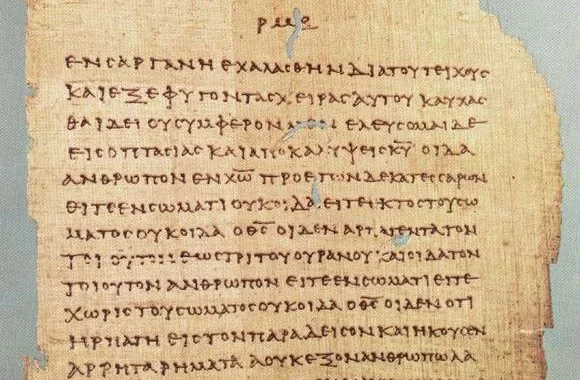
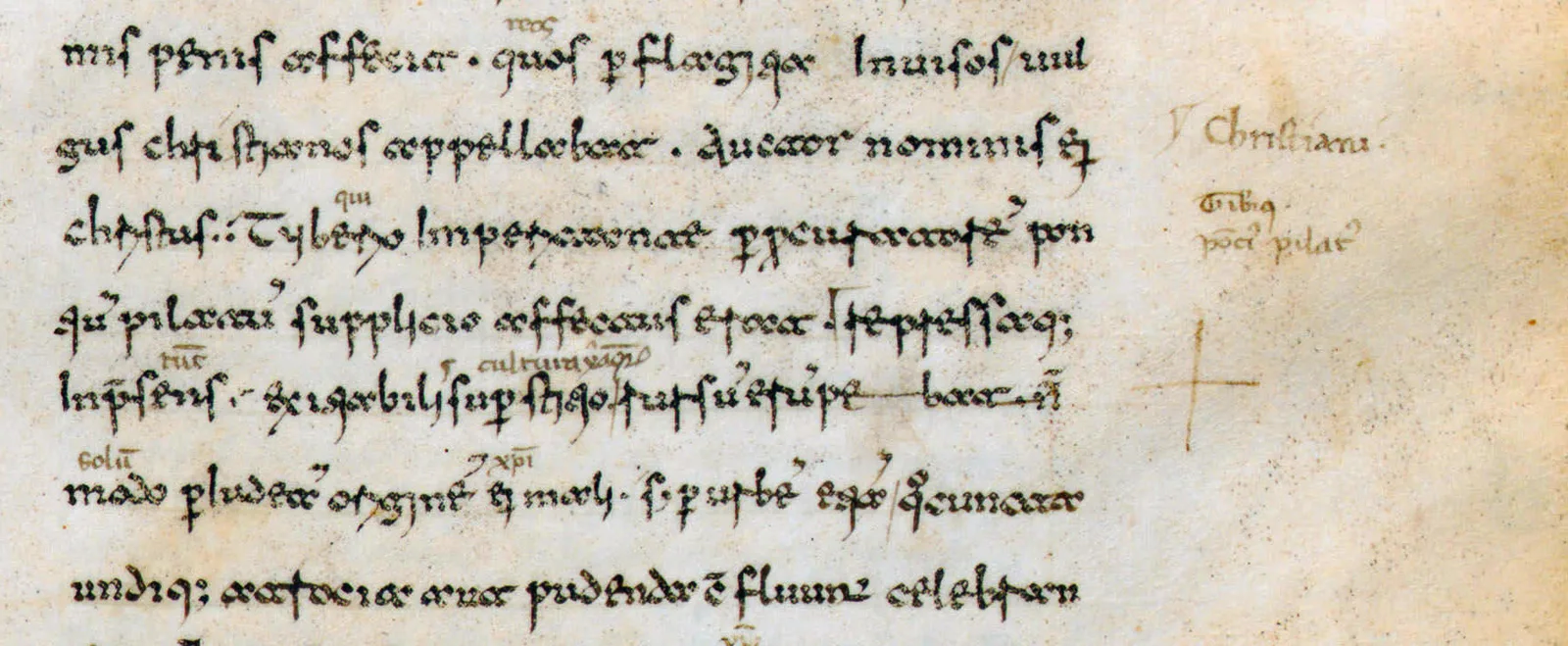
Grok cited Paul, Josephus, and Tacitus; we added Pliny the Younger because he shows how Christians viewed Jesus as early as the beginning of the 2nd century. The existence of Jesus as a person is accepted by the vast majority of historians, Christian or not. The crucifixion under Pontius Pilate is among the most widely accepted facts of antiquity. These are the most frequently cited sources, with the approximate date of each (Jesus was crucified around the year 30):
| Source | Who wrote it | When | What it says |
|---|---|---|---|
| Letter to the Galatians 1:18-19 | Paul, who knew the apostles | the 50s | Paul says he was in Jerusalem with Peter and with James, “the Lord's brother” |
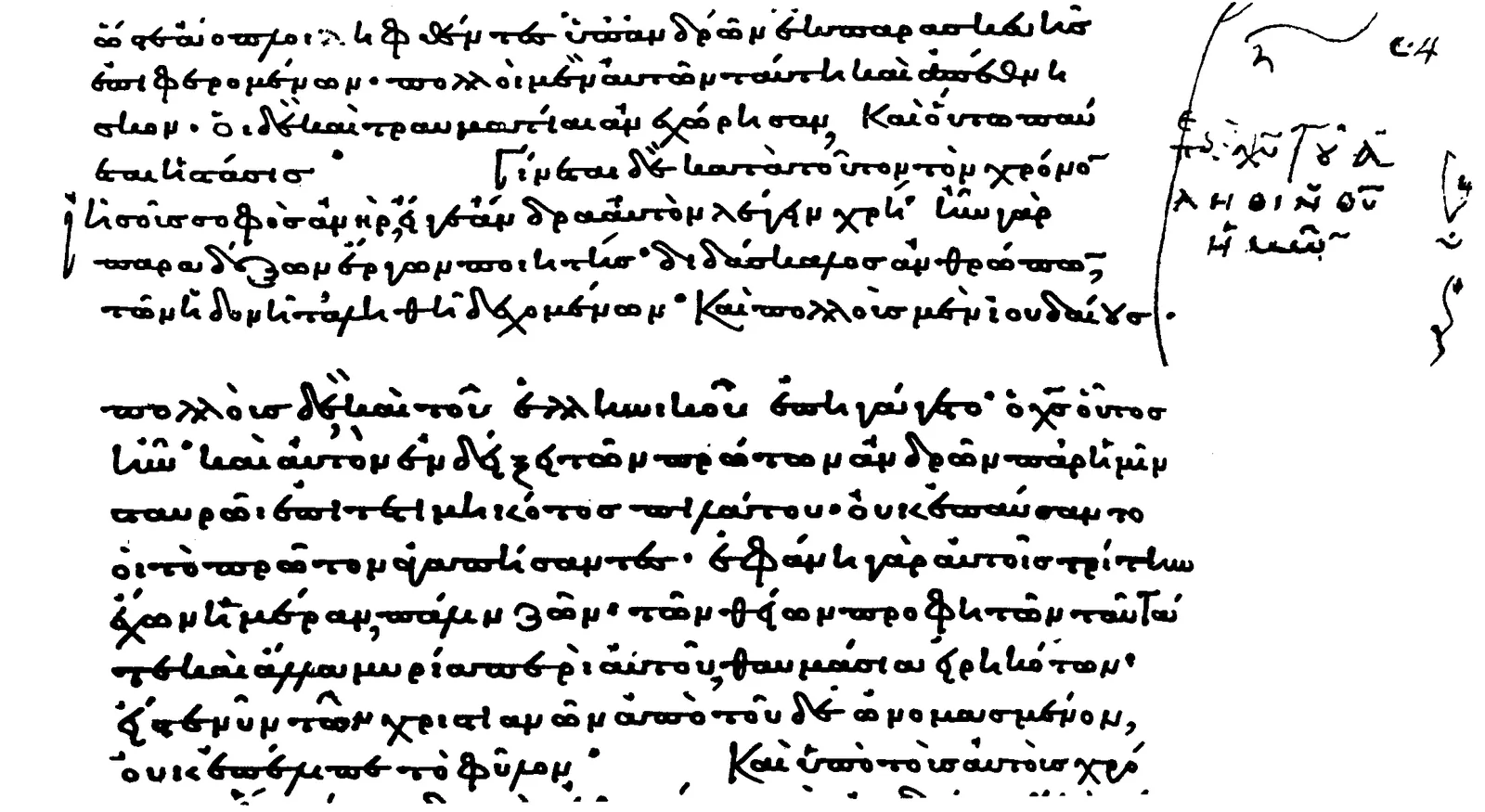
| Jewish Antiquities 20.200 | Flavius Josephus, Jewish historian, not a Christian | around 93 | Mentions “James, the brother of Jesus, who was called Christ” |
| Letter 10.96 | Pliny the Younger, Roman governor | around 112 | Tells the emperor that Christians gathered before dawn and sang hymns to Christ “as to a god” |
| Annals 15.44 | Tacitus, Roman senator, hostile to Christians | around 116 | Says Christ was executed by the procurator Pontius Pilate during the reign of Tiberius |
Note that three of these four sources weren't even Christian, and one of them despised Christians. Josephus also has a second passage about Jesus, the so-called Testimonium Flavianum (Antiquities 18.63); historians agree it received additions from Christian copyists, but most believe there is an original core.
What about the others in the image?
Zeus, Thor, and Anubis belong to mythology: no one left a record of having met them, and no historian treats them as people who existed. The same goes for the other gods in the image.
The founders of other religions are a different case, and that's where the argument gets more interesting:
- Buddha existed. A stone pillar erected by order of Emperor Ashoka, about 200 years later, marks the place where he was born, in Lumbini. But in Buddhist texts, when asked whether he is a god, he says no: he says he is awakened.
- Muhammad existed. A Christian chronicle mentions him just a few years after his death. But the Quran itself presents him as a man and a messenger, never as God.
The difference Grok pointed out is this: among the names in the image who actually existed, none besides Jesus is portrayed in ancient texts as presenting himself as God. The gospels record statements such as “I and the Father are one” (John 10:30). Historians still debate the exact words of the historical Jesus, but there is consensus that, within a few decades of the cross, his followers were already worshiping him as God.
How artificial intelligence gets there in seconds
An artificial intelligence like Grok doesn't “know everything.” It was trained on a gigantic portion of what humanity has written and published: books, articles, encyclopedias, two thousand years of history. It isn't everything, and the training has a cutoff date. Grok also checks X and the web when it answers.
During training, the model learns which words appear near which. The name Jesus appears alongside Pilate, Tacitus, real dates, and real places; Zeus appears alongside Olympus and poems. When answering, it cross-references the request with all of this and calculates the most likely response. That's why the answer comes out in seconds, and that's why it depends heavily on how the question is asked.
An honest caveat: when we repeated the original request in other artificial intelligences, they refused to judge religions and removed only the fictional characters from the image. But when the question was historical (who has evidence of having existed, and who declared himself God), the answers matched Grok's. The way you ask changes everything.
History is one thing, faith is another
Existing in history is one thing. Being God is a matter of faith. Artificial intelligence goes as far as history goes: it shows that Jesus existed, that he was crucified under Pilate, and that within a few decades he came to be worshiped as God. Beyond that, no machine can answer. Grok itself said it has no faith at all.
And some people were bothered by the episode. On October 3, Sam Altman, CEO of OpenAI, the company behind ChatGPT, wrote on X that he is “very uncomfortable” with people trying to ascribe religious force or surrender human judgment to artificial intelligence models, and that he sees this as “a real safety issue.” He did not mention Grok by name.

Frequently asked questions
Did Jesus really exist?
Yes, according to the vast majority of historians, including those who are not Christian. The letters of Paul, Flavius Josephus, Pliny, and Tacitus mention him or his followers between 20 and 90 years after the crucifixion, which is a short time by the standards of Antiquity.
Did artificial intelligence prove that Jesus is God?
No. It showed what history records: that Jesus existed and that he was worshiped as God from early on. Whether he is God is a matter of faith, and Grok itself said it has no faith.
Why did Grok remove Buddha and the other founders?
Because the request was to remove the “false gods.” Buddha and Muhammad existed, but they did not present themselves as God; Zeus, Thor, and Anubis are mythology. By Grok's criteria, only Jesus combined both things: historical existence and a claim to divinity.
Do other artificial intelligences answer the same way?
It depends on the question. With the original request, they usually refuse to judge religions. With a historical question, they reach the same point as Grok about who existed and who declared himself God.
Why was the post deleted?
There was no public explanation. The conversation was documented by several news reports before the post was taken down.
Sources
- The Christian Post, 10/06/2026: “Grok AI chatbot affirms divinity of Christ, citing historical record”.
- Crosswalk, 10/05/2026: “Why Did Grok Leave Jesus? AI Bot’s Surprising Answer Sparks Online Debate”.
- The News-Chronicle: view and like counts for Grok's response.
- Relevant Magazine and Sam Altman's post on X, 10/03/2026.
- Letter to the Galatians 1:18-19; Flavius Josephus, Antiquities of the Jews 18.63 and 20.200; Pliny the Younger, Letters 10.96; Tacitus, Annals 15.44.

About Lee Sugano
Lee Sugano
Digital solutions agency based in Japan, serving clients in 10+ countries. We share insights on development, design and digital marketing for companies that don't settle for generic.
Enjoyed this content?
Receive exclusive insights about web development, design, and digital marketing straight to your inbox.
No spam. Unsubscribe anytime.